

以中美两国为例,分析不同医疗模式下互联网+人工智能(AI)医疗的发展模式、现状和趋势。美国有2种模式:由科技公司提供的互联网+AI医疗虚拟诊室和由医疗机构加持互联网+AI医疗服务,分别以总部位于亚利桑那州的AdviNow医疗科技公司和总部设在新泽西州的Inspira医疗集团为例。中国目前的典型模式是以三级甲等医院为实体机构的互联网医院加持AI升级为智慧医院,以广东省第二人民医院为例。比较两者的异同,探讨互联网+AI医疗的未来走向及应当关注的问题。



本刊刊出的文章除特别声明外,不代表主办单位和本刊编委会的观点。本刊如有印刷质量问题,请与本刊编辑部联系调换。
雷·库兹韦尔认为计算机的计算能力将呈指数级增长,到2023年,个人脑力都将被计算机超越,到2045年将达到的奇点,那时计算机将超过所有人类大脑的总和。人工智能(artificial intelligence,AI)的奇点是机器超越人类智能,从而成为超越社会生物有限性的拐点[1]。虽然这个推测有些令人生畏,但人工智能的确已经为当代医疗服务带来诸多改变。李开复和陈秋凡合著的《AI 2041》中,讨论了精准医疗、机器人手术和其他正在被人工智能改造的医疗服务方[2]。他们认为,到2041年,患者和用户将通过云获得所有个人数据,所有医疗服务数据都以人工智能为工具而数字化。
医疗服务提供方将基于大数据及临床和经济方面的考量对不同人群进行比较,提出更加合理的解决方案。例如,“挂号”的过程将使用生物传感器生成个人智能流直接将信息发送到医疗机构,药物治疗将自动与患者的情况相匹配。同时,医疗服务的数字化将改变放射医学等学科。根据他们的预测,人工智能将使精准医疗成为可能,从而避免了医师使用软件工作出现“橡皮图章式”的诊断。结合我们正经历的由远程医疗到互联网+AI医疗对医疗行业所产生的变革来看,这些预测是现实的。中美两国医疗体制不同,两国互联网+AI在现实中的应用亦呈现出各自不同的特点。
1.互联网+AI虚拟诊室:AdviNow Medical公司早期提供远程医疗服务,加持AI后提供一种可由患者远程驱动的医疗服务平台。该平台实际是一种在线的虚拟医疗诊室,患者可居家获得常见病多发病的诊疗服务。患者就医程序如下:登录AdviNow零售AI/AR(人工智能/增强现实)网站,在线AI程序指导患者使用AR进行精确的查体测量(温度、血压、血氧、体重、耳、鼻、喉图像和胸部、肺和腹部音频记录),并询问相关问题,直到收集供临床鉴别诊断的信息。然后,进入AI增强现实支持下所形成的虚拟诊所与医师进行会面。AI程序向医师提供一个详细的疾病预测诊断,包括对患者主、客观信息进行同行评审式的相关性评价。医师审查基于证据的诊断,包括每种疾病发生的内在逻辑,再与患者进行确认,并提出个性化的治疗建议方案。医师通常可在2 min内完成以上过程。接着,AI程序形成图表,在电子病历中填写主观、客观、评估和计划(SOAP)表,向患者发送药方和医嘱以及个性化定制的诊断书。所有文档、资料编码和计费付费等都由AI完成[3](图1)。AI可以根据医生开的药方为患者提供送药到家的服务,如果患者需要药物之外的医疗服务,则可根据医嘱到实体医疗机构线下就医。
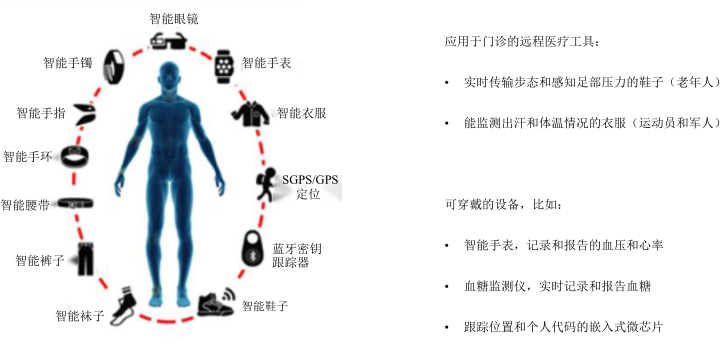
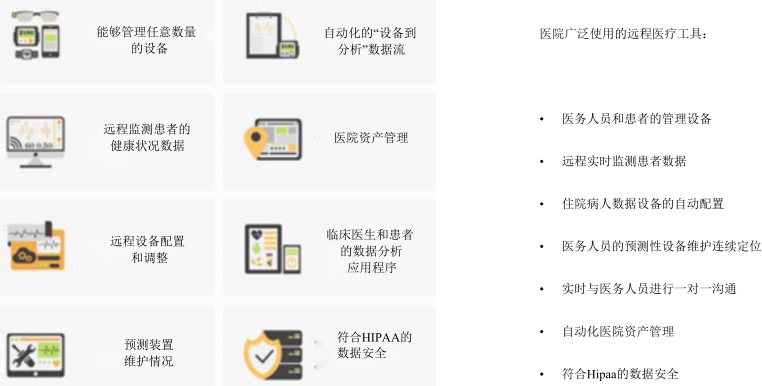
2.互联网+AI医疗服务:Inspira医疗集团在整个新泽西州南部拥有45个医疗机构,包括医院和医师诊所。该集团为常见多发病和长期健康管理提供互联网医疗服务,是美国全科医疗采用互联网医疗和精准医疗服务的领头羊。其提供的互联网医疗服务可以通过电话、智能手机、平板电脑或电脑进行,同时将可穿戴设备用于患者远程监测。大多数看病预约都是通过语音和视频进行的。因此,医师和患者可进行一对一的视频评估。其就医流程如下:患者登录APP进行在线预约,在预约后会收到一个链接进行挂号并得到相应的就医指引,之后会与预约医师在线会面并完成就医过程。该医疗集团非常注重于互联网AI视频医疗,特别是在线全科诊疗和行为健康管理。该集团提供全天互联网医疗服务,被称为“Inspira即时医疗服务”,其互联网医疗的形式主要是基于AI机器人的利用。该医疗集团还提供在线遗传医学的医疗服务,对患者的DNA进行基因追踪检查,寻找与癌症等疾病相关的基因突变,一旦发现基因异常,就实施靶向治疗[4],图2所列为医院广泛使用的远程医疗的设备。
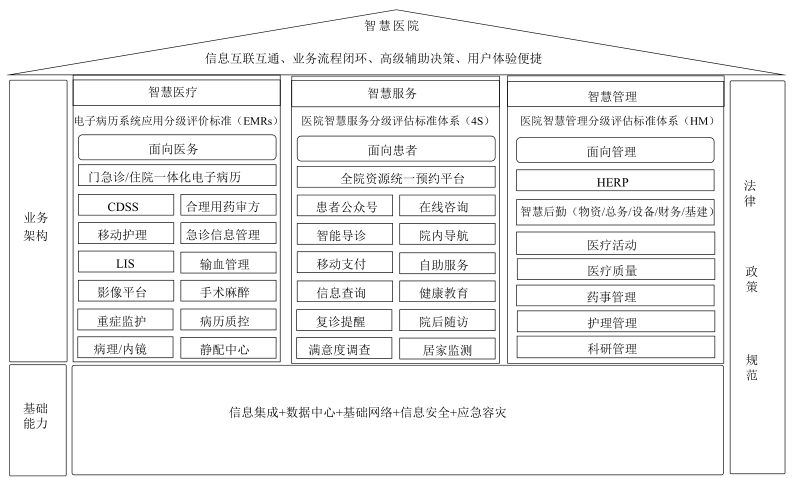
广东省第二人民医院正在建设的5G智慧医院是AI应用于医疗服务和医院行政管理的一项创新。该院拥有病床1500张,得到政府的支持,与华为公司合作安装5G和云计算平台,并将院内的互联网医疗系统、医院信息系统、检验影像系统和行政管理系统等整合为一个综合平台。该院是中国首家互联网医院,目标是提供一种院墙内外一致的互联网+AI医疗服务[5, 6]。基本框架见图3。
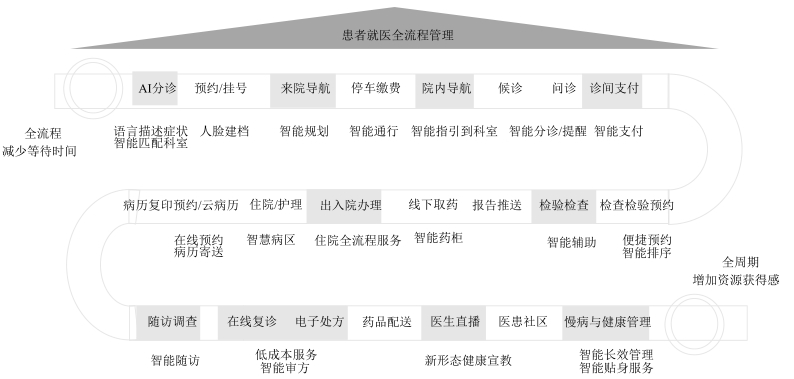
我国互联网医院发展较快,通常是实体医疗机构连线诊所和药诊店,患者可以在网上与医师交流。根据现行的规定,医师可以在网上为患者的常见病多发病复诊并开处方,患者可在药店获取处方用药。然而,由于网上医师相对不足,且无法在线报销药费,发展遭遇困境[7]。广东省第二人民医院通过加持AI和数字孪生技术较好地解决了这些问题。医院通过AI技术和机器人主要提供了以下应用场景。
1. 病房管理:住院患者床边安装了触摸屏,患者可与医护人员有更多的互动,从而获得更好的护理照顾。可穿戴追踪器用于持续监测患者的状况、虚拟追踪器用于监测有摔倒风险的患者。机器人的使用还改善了供应和连锁配送管理,可将护理所需的物品运送到床边,并动态保持物品库存水平。
2. 感染控制和手术室管理:用机器人扫描可能的感染区域以加强手部卫生管理,它们还被用于对病区进行消毒和运送药品。使用机器人已被证明可以改善临床治疗结果,并减轻医务人员的工作量[8]。在手术进行时,相关检查和影像数据可直接通过显示器显示,以便使医师即时采取相应措施。
3. 安全管理和培训:目前医院正在利用人工智能作为一种新的监管方式来解决安全问题,控制医院各区域准入人员。安装在公共区域的聊天机器人被用来与患者互动,以指导他们的访问。通过人工智能技术监管口罩佩戴和特定区域人员数量情况。利用虚拟和增强现实设备进行培训和教育,更好地提高医务人员的业务能力和服务水平,提高运营效率。
4. 5G救护车:医院救护车配备了5G技术。在一个小型移动单元里,可以向医院专家提供实时通信,及时获得CT扫描、超声心动图和心电图的资料,为急重症患者抢救赢得宝贵时间[9]。
5. 智慧医疗社区和智慧家庭病房:这是将医院服务跨越院外的仍在探索之中的一项创新。医院向患者提供可穿戴设备和床边医疗设备,以便实时收集患者信息,让患者能够在社区和居家持续地解决他们的医疗保健问题。随着中国人口的老龄化,医疗监测迅速扩大到家庭的时机正当,这也是解决老年人医疗服务的最佳方式。因为一般公众已经开始接受和信任虚拟医疗服务,他们顾虑的数据安全和隐私保护的问题正在逐渐得到解决。
自2010年至2019年,由远程医疗至互联网医疗发展的第一阶段已经基本结束。这一阶段的标志是广泛采用基本的远程信息技术,包括在线协议和医师与患者之间共享数字信息。自2020年起,由于COVID-19病毒感染大流行,客观上助推了AI在医疗服务领域中的运用。例如意大利国家多学科心肌炎病房在4个月内快速转型为远程病房,COVID-19感染的疫情无疑为这个转型的“助推器”。这种快速的转型还得益于医学影像领域数字技术的快速发展[10]。
在互联网医疗快速发展的今天,其服务包含了全科医疗、精神卫生和专科医疗等从慢病管理到急症医疗等多个方面。互联网医疗在美国突破是,医保可报销互联网医疗费用;在中国的情况则是,政府出台相关政策大力支持建设公立、民营互联网医院。我们可以看到,由于可穿戴设备的运用,个人和群体与健康相关的连续数据可即时收集,这信息技术的运用将颠覆传统医疗服务的方式,可使医师对患者实现快速和远程的诊断。不少医疗机构已开始运用互联网医疗技术为个人和群体提供个性化的医疗服务[11]。未来研究分析师Damien Ng认为,未来医疗服务的趋势将是数字健康、基因组学和延长寿命[12]。数字医疗服务趋势在医疗健康领域已越过了初始阶段。目前在数字医疗领域中被广泛运用的有3种解决方案或称之为3个趋势,分别是互联网医疗、移动医疗和新的医疗技术(简称新医技)。
互联网医疗是远程医疗发展的新阶段,指在临床实践中使用在线应用程序,从安排预约到访问数字图像,再到患者与医师在线会面。患者在没有人工协助的情况下,自然而轻松地完成预约登记、问诊和付款全过程。医师则根据患者主诉进行病情诊断,并指导患者选择最适当的治疗方式。在线问诊过程简单、廉价、可及性高。American Well于2019年11月收购了Aligned Telehealh,成为美国医疗保健领域最大的提供互联网精神病和心理健康服务平台的机构[13]。
它包括患者和医师通过在线平台访问数字信息的能力。此类平台可能像Google和Facebook或医疗机构的临床网站一样常见。远程应用程序和可穿戴设备简化了检查过程,并对患者健康状况进行持续监测。与传统医疗方式相比,这种发展本身是创新性的,进一步提高了医疗效果。例如,给长期护理机构如专业护理院的患者或养老院的人员佩戴个人移动和可穿戴监测设备,可以帮助监测包括糖尿病和高血压在内的许多常见慢性疾病患者的身体状况,便于专业护理人员和医疗机构人员的医疗数据共享,使该人群获得更好的医疗服务。
此处的新医技是特指采用和实施超越放射学和心脏医学应用的成像视频技术。基因靶向治疗是一种为患者个人定制的疾病预防与治疗的方式。长期以来,对于癌症是通过药物干扰参与癌症生长、发展和扩散的特定分子来阻止癌细胞的生长和扩散。而基因靶向治疗则采用癌症靶向治疗,或被称为“分子靶向药物”、“分子靶向疗法”和“精准医疗”。靶向治疗在很多方面都不同于标准的化疗,其是将靶向药物直接与突变基因靶点相互作用[14]。基因靶向治疗与新医技结合,患者可使用基于网络和免费的应用程序如Zoom进行医师与患者面对面的视频问诊或分享图像和其他临床病历等,从而将基因靶向治疗在线进行。
互联网医疗肯定会拥抱数字创新,以为患者提供更好的医疗服务[15]。互联网医疗加持人工智能和基因编辑是影响现代医疗服务的两个最大的前沿技术。2012年基因编辑技术的发展给科学家们带来了巨大的兴奋,他们意识到基因序列可以被编辑,以消除导致遗传性疾病的异常现象。这同时意味着研究人员轻松地改变DNA序列和修改基因功能,它将衍生出许多潜在的应用,包括纠正遗传缺陷,治疗和预防疾病的传播,以及改善作物的生长等。
互联网+AI医疗的前景无疑是非常光明的,特别是当人类社会从新冠大流行中解脱后,将释放出来巨大的能量。美国精准医学协会数据科学新冠状病毒特别工作组的负责人Martin Ciupa认为,人工智能将在4个主要方面改善医疗服务[18]。将通过减少成本、资源浪费和提高工作效率来提高生产力;将通过提高诊断的准确性、日常任务的自动化和减少患者就医等待时间等,提高服务质量。医疗方案的个性化制定将使医疗方式变得更加有效和准确。最后,AI将参与新药的开发,使治疗更有效。因此,我们必须抓住人工智能给我们提供的机遇,使互联网+AI医疗提升至更高的水平。
Ray Kurzweil charted stages of accelerated technology development as a function of exponential growth in computing power. It is suggested that in 2023,the brain power of any single human brain will be exceeded by a computer. We are leading to a singularity predicted for 2045,when computing brain power will exceed that of all human brains combined. The singularity in artificial intelligence(AI)is the inflection point where machines advance beyond human intelligence and thus become self-sufficient[1]. This concept,or as some would say,reality,can be daunting. In certain applications,though,there are enormous benefits to applying AI. One of these is medicine. Kai-Fu Lee and Chen Qiufan are co-authors of the book“AI 2041”. The authors address precision medicine,robotic surgery and other healthcare utilities being transformed with AI[2]. They believe that all individual data by 2041 will become available to the patient/user through the cloud,and all health care data will be digitized with AI as a tool.
Healthcare delivery will be based on data transfer and comparisons made with various populations according to clinical and economic considerations and provide more reasonable solutions. For example,the process of “checking-in” will become wholly digital using a biosensor that sends information directly to the healthcare setting via a personal “smartstream”,and pharmaceutical therapies will be automatically matched to individuals who will be accessible to clinicians. In another rapid development,the digitization of medical records has permanently transformed radiology. Among Lee and Quifan’s most attention-grabbing predictions is that “A.I. will enable precision medicine,with doctors often simply rubber-stamping diagnoses the software makes”. These predictions are realistic,considering we have already witnessed how the combination of telemedicine +AI is currently transforming the healthcare industry. Chinese and U.S. healthcare systems are different,and the real-world applications of Internet+AI in the two countries show their different characteristics.
(1)U.S. Internet+AI Virtual Clinic and Internet+AI Medical Services
Internet+AI Virtual Clinic: AdviNow Medical is an early telemedicine company that implemented a remote patient-driven platform. Primary care services are offered with the patient at home,in an AdviNow retail AI/AR(Artificial Intelligence/Augmented Reality)site,meeting with a provider virtually in an AI-augmented full-service clinic. The online AI program guides the patient using AR to take precision medical measurements(temperature,blood pressure,blood oxygen,weight,ear,nose,throat images and chest,lung and abdomen audio recordings)and asks follow-up questions until the information for a clinical differential diagnosis is collected. The AI then delivers a complete working diagnosis to the provider with a breakdown of predicted illnesses with peer-reviewed correlations to objective and subjective information collected from the patient.The provider reviews the evidence-based diagnoses,including the exact logic behind each illness,to confirm with the patient and suggest a customized assessment and treatment plan. The provider selects the diagnosis and treatment completing an efficient,accurate diagnosis and treatment in less than 2 minutes. The AI then completes the chart,scribes the SOAP(Subjective,Objective,Assessment,and Plan)in the EMR(electronic medical record),places orders,and delivers a customized discharge note to the patient. All documentation,coding and billing are completed by the AI[3](Figure I). AI can provide patients with medicine delivery services to their homes based on the prescriptions prescribed by doctors,or if patients need medical services other than medicine,they can go to physical medical institutions offline,according to medical advice.
Internet+AI Medical Services: Inspira Health Network is an example of a larger health system with its 45 healthcare sites located throughout Southern New Jersey. These include hospitals as well as primary care offices. They have been a leader adopting telemedicine and precision medicine in primary care in the United States. Inspira offers telemedicine for both routine care and long-term health management. Telemedicine can be conducted via telephone,smartphone,tablet,or computer. IHN incorporates wearable devices for the monitoring of their patients remotely. Most appointments are held via voice and video,so that a visual assessment can be conducted at the person-to-person level. Before the patient appointment is scheduled to begin,they receive a link to check in and are given instructions. Patients can book an appointment online through a simple AI online app. Inspira is a frequent user of telemedicine and prefers virtual visits for primary care and behavioral health. It offers 24/7 virtual care,referred to as “Inspira Care On Demand”. The form of telehealth is based on the utilization of AI bots. Inspira also utilizes genetic medicine in practice. Genetic tests examine the patient’s DNA looking for the genetic mutations linked to conditions like cancer. Once genetic anomalies are detected,targeted therapies act on specific molecular targets[4]. Figure 2 shows the equipment widely used in hospitals for telemedicine.
China's Internet hospitals have developed relatively quickly,usually with brick-and-mortar medical institutions connecting clinics and pharmacies,where patients can communicate with physicians online. According to the current regulations,physicians can review and prescribe for patients' common diseases and illnesses online,and patients can obtain prescription medications at pharmacies. However,the development has encountered difficulties due to the relative shortage of online physicians and the inability to reimburse medication costs online [7]. Guangdong Second Provincial General Hospital has better solved these problems by adding AI and digital twin technology. The hospital provides the following application scenarios mainly through AI technology and robotics.Ward management: inpatients have a touch screen installed at their bedside,allowing patients to interact more with healthcare professionals and thus receive better nursing care. Wearable trackers are used to monitor patients' conditions continuously,and virtual trackers are used to monitor patients at risk of falling. Using robots has also improved supply and chain distribution management by delivering items needed for care to the bedside and dynamically maintaining item inventory levels.Infection control and operating room management: Robots are used to scan potentially infected areas to enhance hand hygiene management,and they are also used to disinfect patient areas and deliver medications. Using robots has been shown to improve clinical outcomes and reduce the workload of medical staff [8]. Relevant examination and imaging data can be displayed directly on the monitor while the procedure is in progress to enable the physician to take immediate action.Safety management and training: hospitals are now using AI as a new regulatory approach to address safety issues and control access personnel in all hospital areas. Chatbots installed in public areas are used to interact with patients and guide them through their visits. Mask wear and the number of people in specific areas are regulated through AI technology. Virtual and augmented reality devices are used for training and education to improve the operational capabilities and service levels of medical staff and increase operational efficiency.5G Ambulance: Hospital ambulances are equipped with 5G technology. In a small mobile unit,real-time communication can be provided to hospital specialists to obtain timely information from CT scans,echocardiograms,and ECGs to gain valuable time for emergency patient resuscitation [9].Smart medical communities and smart family wards: this innovation is still being explored to span hospital services outside the hospital. Hospitals are providing wearable devices and bedside medical devices to patients to collect patient information in real-time,allowing patients to address their healthcare issues in the community and at home on an ongoing basis. With China's aging population,the time is right for medical monitoring to rapidly expand to the home,which is the best way to address healthcare for the elderly. Because the general public has come to accept and trust virtual healthcare services,their concerns about data security and privacy protection are gradually being addressed.
From 2010 to 2019,the first stage in the evolution of telemedicine is mostly over. This stage is marked by the widespread adoption of basic tele-technologies. These technologies include online protocols and digital information sharing among physicians and patients. Since 2020,the COVID-19 pandemic has actually helped to advance the use of AI in medical care. The role of COVID-19 is as an “accelerator”. The rapid redesign was enabled by the rapid development of digital technology in medical imaging[10].
In the rapid development of Internet healthcare today,its services include a variety of aspects from chronic disease management to acute care,such as general medicine,mental health and specialty medicine. An Internet medical breakthrough in the United States is that medical insurance can reimburse the cost of Internet medical care;in the case of China,the government has strongly introduced relevant policies to support the construction of public and private Internet hospitals. As we can see,due to the use of wearable devices,continuous health-related data of individuals and groups can be collected instantly,and this information technology will overturn traditional medical services,enabling physicians to rapidly and remotely diagnose patients. Many healthcare organizations are already using Internet health technologies to provide personalized medical services to individuals and groups[11].According to Damien Ng,a future research analyst,the future trends in healthcare services will be digital health,genomics,and extended lifespan[12].The trend of digital health services has crossed the initial stage in the healthcare field.There are 3 solutions,called 3 trends,that are widely used in the digital health field:Internet health,mobile health and new medical technologies(referred to as Medtech).
Telemedicine is the use of online applications in clinical practice,from scheduling appointments to accessing digital images to meeting online with the clinician. The patient,without human assistance,naturally and easily completes registration,payment and a thorough patient interview to be guided to the most appropriate care medium given the chief complaint,predicted illnesses and treatment. The most widespread use of online telemedicine is mental health. The online format is simple,cheap and ubiquitous. American Well acquired Aligned Telehealth in November 2019,becoming the largest enterprise telepsychiatry/mental health platform operating in American healthcare[13].
It includes the ability of patients and clinicians to access digital information through an online platform which could be as commonplace as Google or Facebook or the provider’s clinical website. Remote apps and wearable devices streamline the check-in process and perform continuous monitoring of health issues.
This development is inherently innovative and further enhances healthcare outcomes compared to traditional healthcare approaches. For example,personal mobility and wearable monitoring devices were given to patients in long-term care facilities such as skilled nursing homes. People in nursing homes can help monitor the health of patients with many common chronic conditions,including diabetes and hypertension,facilitating the sharing of medical data between professional caregivers and health care facility personnel,allowing for better medical care for that population.
“Medtech” is the adoption and implementation of imaging technologies beyond the more typical radiology and cardio-medical applications. One very exciting development is genomic medicine which is “tailor-made prevention treatments guided by individuals.” Long-standing cancer therapies have used drugs to block the growth and spread of cancer by interfering with specific molecules("molecular targets")involved in the growth,progression,and spread of cancer. Targeted cancer therapies are known as "molecularly targeted drugs," "molecularly targeted therapies," and "precision medicines." Targeted therapies differ from standard chemotherapy in several ways. Targeted therapies are deliberately chosen or designed to interact with their target,whereas many standard chemotherapies were identified because they kill cells[14]. Medtech uses web-based and cost-free applications like Zoom to conduct physician/patient face-to-face meetings to share images and other clinical records from this advanced technology.
Telemedicine will definitely embrace digital innovation and provide many more examples of how we can better provide care to patients[15]. Artificial Intelligence and gene editing are the two greatest bleeding edge technologies impacting modern healthcare. The development of CRISPR technology in 2012 created enormous excitement among scientists who realized gene sequences could be edited to eliminate anomalies that led to inherited disease conditions. CRISPR is an acronym for the Clustered Regularly Interspaced Short Palindromic Repeats system. CRISPR is a powerful tool for editing genomes,meaning it allows researchers to easily alter DNA sequences and modify gene function. It has many potential applications,including correcting genetic defects,treating and preventing the spread of diseases,and improving the growth and resilience of crops. These types of concerns could alter our ability to implement innovative applications of AI in telehealth.
Ethical concerns need to be addressed proactively rather than retroactively. Lack of guidance in the development of AI applications can actually increase health disparities and increase costs if not addressed in the initial algorithms used to create the programs [16]. Regulatory frameworks must be created which will prevent harm but must also not needlessly delay the introduction of more accurate diagnoses and more beneficial treatments. We assume costs would be reduced with the implementation of better ways to provide care but this is not necessarily the case as evident in a case about medical imaging and mammography[17]. Physician distrust of the diagnostic system precipitated duplication of services when data from imaging centers in the U.S. was examined. Privacy and security of the data are continued concerns and cyberattacks are a real threat to the integrity of the system being reliable. This is our opportunity to better leverage AI in telehealth. We must be intentional to integrate patient-centered care that is seamless,personal and easily accessible.
We believe though these concerns should not get in the way of introducing new innovative applications which can improve our longevity and quality of life. The future is very bright for telehealth + AI,especially after our energies are freed from the pandemic. Martin Ciupa,a leader of the American Association of Precision Medicine’s Data Science Coronavirus Taskforce,believes there are four main areas where AI will improve medicine(Rigby,2020). Productivity will be improved through the reduction of waste,time,costs and resources. Quality will be enhanced though greater accuracy in diagnoses,the automation of routine tasks,and the reduction of waiting times. Personalization will allow medical care to become more efficient and accurate. And finally,discovery will have AI involved in the development of new drugs which will make treatments more effective. We must seize this opportunity AI gives us to have telehealth reach new levels of achievement.


