
The first practice of pre-implantation genetic testing (PGT) was reported more than 30 years ago. PGT, originally named preimplantation genetic screening (PGS) and pre-implantation genetic diagnosis (PGD), is now categorized as PGT for aneuploidies (PGT-A), PGT for monogenic/single-gene defects (PGT-M), and PGT for chromosomal structural rearrangements (PGT-SR). Patients with fertility issues caused by advanced maternal age, carrier status of chromosomal abnormalities, or harboring pathogenic variant(s) are recommended to undergo PGT to increase the possibility of successful live birth and avoid potentially affected newborns. High-throughput techniques, such as DNA microarrays and next-generation sequencing (NGS), have enabled comprehensive screening of all 24 chromosomes, instead of few loci at a time. Furthermore, as a comprehensive PGT, PGT-Plus was enabled by the rapid development of a genome-wide single-cell haplotyping technique to detect embryo aneuploidy, single-gene disorders, and chromosomal aberrations simultaneously using a single universal protocol. In addition, non-invasive approaches enable a more intact embryo during the biopsy procedure, which may avoid potential mosaicism issues at a certain scale by testing spent culture media (SCM). As a novel PGT application, PGT-P detects genome-wide variations in polygenic diseases, which account for a large proportion of premature human deaths and affect a markedly larger population than monogenic diseases, using polygenic risk score calculation to decrease the potential of affecting complex conditions. Owing to the emergence of new technologies recruited to PGTs, more couples with infertility issues have a promising chance of conceiving a healthy baby, ultimately facilitating the human species to live more prosper.



Copyright © 2022 Reproductive and Developmental Medicine, Published by Wolters Kluwer Health, Inc.
This is an open-access article distributed under the terms of the Creative Commons Attribution-Non Commercial-No Derivatives License 4.0 (CCBY-NC-ND), where it is permissible to download and share the work provided it is properly cited. The work cannot be changed in any way or used commercially without permission from the journal.
Since the introduction of pre-implantation genetic testing (PGT) in assisted reproductive technology (ART), it has become a routine application for examining aneuploidy, genetic disorders, and chromosome structural rearrangements in embryos and has been widely performed in clinical practice. The terms previously used to refer to PGT include pre-implantation genetic diagnosis (PGD) and pre-implantation genetic screening (PGS). These terms were recently replaced by the term PGT in the European Society of Human Reproduction and Embryology (ESHRE) following a revision of the terminology used in infertility care. The terms were revised to PGT for aneuploidies (PGT-A), PGT for monogenic/single-gene defects (PGT-M), and PGT for chromosomal structural rearrangements (PGT-SR) (Fig. 1A)[1]. Although the tests have been renamed, based on data collected throughout their history, these tests are still mainly used by couples with advanced maternal age, recurrent pregnancy loss, repeated implantation failure, or a family history of genetic diseases[2,3].
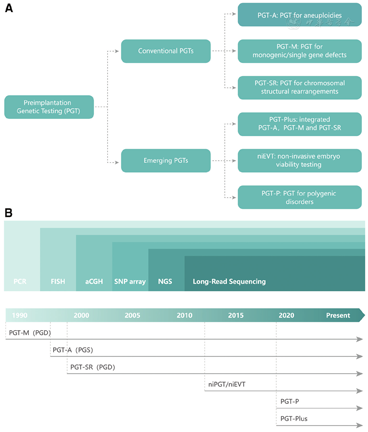
The first report on children born after PGT was published by Handyside et al. in 1990, wherein PCR was employed to detect repetitive Y-sequences for gender determination in families with X-linked diseases[4]. Since then, PGT has evolved from an experimental to a well-established clinical procedure. Along with extensive technical advances in single-cell DNA amplification and genetic testing (Fig. 1B), the technologies that PGT adopted have been markedly advancing in recent years. Notably, next-generation sequencing (NGS) has been increasingly applied in PGT, with a decreased application of the array-based comprehensive genomic hybridization (aCGH) technique. Nevertheless, aCGH is still performed in some clinical laboratories conducting structural variation interrogations, such as chromosomal microarray analysis. Unlike aCGH, single nucleotide polymorphism (SNP) arrays are still widely used in ART; however, owing to the increasing application of NGS, SNP arrays may encounter a decrease in usage. Further, the dramatic development of long-read sequencing (LRS) enables the inclusion of this edge technology in PGT clinics promising.
The PGT has been widely practiced around the world. Based on the US CDC ART 2020 preliminary data (https://www.cdc. gov/art/), 326,468 ART cycles were performed at 449 reporting clinics in the United States in 2020, resulting in 75,023 live births. The use of ART has more than doubled over the past decade, and approximately 2.2% of all infants born annually in the United States are conceived using ART. According to the official data released by the Chinese Society of Reproductive Medicine (CSRM) reported by 263 of 498 fertility centers in China, in 2018, 204,688 babies were born using ART, and 76.56% of ART cycles were stimulated cycles (348,294), among which 4671 were PGD cycles, and 3580 were PGS cycles (http://www.nhc.gov.cn/wjw/)[5]. Of note, not all clinics reported their cycles. A recent analysis of the UK Human Fertilization and Embryology Authority data and the US Society for Assisted Reproductive Technology data from 2014 to 2016 demonstrated that in the United Kingdom, PGT was used in less than 2% of IVF cycles. In contrast, in the United States, PGT was used in 21% of IVF cycles. This difference may be related to the funding of PGT in the United Kingdom and the United States[6]. The latest ESHRE PGT Consortium report reviewed 8803 analyses performed by participating centers from 2016 to 2017, which included 4033 PGT-A tests (45.8%), 3098 PGT-M tests (35.2%), 1018 PGT-SR tests (11.6%), and 654 tests for concurrent PGT-M/SR with PGT-A (7.4%), indicating that PGT-A still accounts for the majority of the analyses[7]. According to statistics from 52 reproductive facilities presented at the PGT consortium meeting held in Vienna in 2019, from 2017 to 2019, among 4012 cases of PGT, PGT-A accounted for approximately 40%, PGT-M accounted for approximately 38%, PGT-SR accounted for 16%, and others accounted for 6%. Of note, PGT-A, PGT-M, and PGT-SR tests were performed simultaneously in many cases[8]. For the pregnancy rate, the ESHRE European IVF-Monitoring Consortium’s 2015 PGT data revealed a pregnancy rate of 39.7% per fresh embryo transfer cycle and 41.0% per frozen embryo transfer relative to all PGT indications in 23 countries[9].
In this review, we aimed to describe the applications of PGT-A, PGT-M, and PGT-SR, to introduce several state-of-the-art technologies, such as PGT-Plus which is a comprehensive PGT, non-invasive embryo viability testing (niEVT) that also called non-invasive PGT, and PGT for polygenic diseases (PGT-P); and briefly reflect on their applications in the near future.
PGT-A is the definitive tool for embryo selection based on euploidy[10], previously referred to as PGS. According to the latest published guidelines, PGT-A is recommended in certain patients of advanced maternal age, recurrent miscarriage owing to unknown causes, recurrent implantation failure, and unexplained severe teratozoospermia[11].
PGT-A employs several methods to screen IVF embryos for aneuploidy to achieve a high pregnancy rate. Polymerase chain reaction (PCR) and fluorescence in situ hybridization (FISH) have been used to detect chromosome aneuploidy in pre-implantation embryos for many years[12,13,14,15,16]. However, these technologies have gradually phased out owing to their limitations, such as the inability to detect new mutations, low flux, and proneness of producing false positive or false negative results. Array-based CGH and SNP array technologies have enabled improved detection capability at the whole-genome level[17,18]. Compared to FISH, aCGH can more effectively detect copy number variations (CNVs) and unbalanced translocations[19]. Fragouli et al. simultaneously used the aCGH and FISH techniques to analyze 12 embryos donated by five patients[20]. Although the test results of nine embryos (75%) were found to be completely consistent, FISH did not detect two aneuploid embryos, and one embryo was incorrectly identified by FISH as trisomy 8; poor fixation and insufficient data from very few cells were suggested as possible reasons. Owing to the dramatic development of NGS, this technology has been introduced as a state-of-the-art approach to aneuploidy screening, characterized by its high throughput, low cost, high sensitivity, and high specificity[21]. Various studies validating the accuracy of the NGS approach for comprehensive chromosomal screening (CCS) of embryos have demonstrated 100% diagnostic consistency with aCGH[21,22]. Furthermore, the implementation of embryos undergoing NGS-based PGT-A revealed higher implantation rates (71.6% of 548 cycles vs. 64.6% of 368 cycles) and live birth rates (LBRs) (62% vs. 54.4%) than those with aCGH, which might be attributed to the advantages of NGS in detecting microdeletions, microduplications, and mosaicism[23,24]. Owing to the increased accuracy of diagnosis that impacts LBRs, the application of NGS represents a breakthrough for PGT-A. It has been performed in tens of thousands of cases annually, particularly for couples of advanced reproductive age[24].
NGS has revealed mosaicism and sub-chromosomal variations, such as segmental aneuploidies, which were not previously detected by FISH owing to relatively low resolution. As a high rate of mosaicism was observed at the cleavage stage, which showed no relationship with maternal age, the performance of PGT-A at the cleavage stage is useful[25]. Moreover, 58% of segmental aneuploidies were detected and require further interpretation[26]. When no euploid embryos exist at the clinic, transplantation of mosaic embryos or embryos with segmental aneuploidy is considered a choice, with adequate counseling of the potential risks provided to patients to enable an informed decision[27]. A study showed that in low-medium mosaicism (impacted fewer than 50% of cells in one trophectoderm [TE] biopsy) embryos, only 1% of aneuploidies affected other portions of the embryo, and thus have equivalent developmental potentialities as to euploid embryos[28]. Compare to low-level mosaicism, high-level mosaicism (impacted more than 50% cells in one TE biopsy) demonstrated comparable LBR (36% vs. 44.5%, P = 0.45) but significantly higher miscarriage rate (MR, 30.7% vs. 5.1%, P = 0.012)[29]. Their outcomes of whole chromosome mosaics and segmental mosaics were also different. Tiegs et al. found similar LBR between whole chromosome mosaics and euploids (68.8% vs. 64.7%, n = 16 and 312, respectively), but segmental mosaics had significantly lower LBR (30.8%, n = 39)[30]. Another study, including 20 segmental mosaic embryos, also showed a significantly lower LBR compared with euploid controls (30.0% vs. 53.8%)[31]. However, mosaicism and sub-chromosomal variation partially account for the failure of euploid embryo transfer. Therefore, further investigations are needed to improve the screening criteria for euploid embryo transfer to ensure a high pregnancy success rate. Later, the copy number of mitochondrial DNA (mtDNA) was used as a screening index for embryo transfer[32,33]. However, generally equal mtDNA levels between stratified blastocyst groups based on ploidy, age, or implantation potential were observed[34].
In 2019, the PGDIS issued a position statement stating that PGT-A has positive effects on implantation, pregnancy, and LBRs[35]. However, several studies revealed that PGT-A could neither improve the success rate of IVF nor significantly reduce the occurrence of abortion, especially in women with fewer embryos. Therefore, the number and quality of embryos available for biopsy is important to determine whether PGT-A can produce beneficial effects in terms of IVF cycles[36,37,38]. In 2021, Yan et al. demonstrated that LBRs in the control and PGT-A groups were 81.8% and 77.2%, respectively, indicating that among patients with three or more good-quality blastocysts, PGT-A had no significant superior effects compared to conventional IVF[39]. Meanwhile, according to a recent study, although PGT-A did not improve clinical outcomes in the general population, this test substantially increased the rate of live births in women over 35 years old[40]. In general, PGT-A can reliably determine whether the embryo is euploid or has chromosomal abnormalities, offering a selection of euploid embryos for transplantation to improve the implantation rate and reduce abortion, which may be more beneficial to pregnant women with PGT-A indications.
Pathogenic variations in a single gene can cause monogenic disorders. Although monogenic diseases are generally rare, the accumulated incidence rate exceeds 1%, and their clinical manifestations include body/intellectual disability and even lethality. Therefore, PGT-M is critically needed to prevent congenital disabilities caused by monogenic diseases before embryo transfer[41]. In theory, PGT-M can be used for all monogenic disorders with unequivocal identification of pathogenic loci; however, the severity of the disease and the actual situation of the visiting family must be comprehensively considered[42,43]. Indications for PGT-M include X-linked disorders (eg, Duchenne’s muscular dystrophy), dominant single-gene disorders (eg, Huntington’s Disease), recessive single-gene disorders (eg., cystic fibrosis)[44], mitochondrial disorders (eg, Kearns-Sayre Syndrome)[45], HLA typing (eg, savior siblings)[46,47], and some severe disorders with high genetic predisposition (eg, hereditary breast and ovarian cancer)[48]. However, the indications of PGT-M should also be highlighted: the mutated gene must have a family with a clear pathogenic or pathogenic gene-linked marker, and the severity of the disease and the actual situation of visiting family members must be comprehensively considered[42].
The diagnostic PGT approach has markedly evolved over the past few years. In the early 1990s, single-cell simplex PCR amplification was applied; however, this method was perplexed by contamination and allelic dropout (ADO), which may have an adverse impact on diagnosis[49]. Later on, accurate testing results were obtained by simultaneous amplification of short tandem repeat (STR) markers with or without target amplicons from a single or few cells, called the haplotyping method, which has been the gold standard for over two decades[50,51]. To overcome other potential problems generated from the minute quantities of genomic DNA obtained, with sufficient templates of up to several micrograms of DNA obtained from the amplification of a single or few cells, more downstream applications, such as SNP arrays and NGS, were performed and have become the major detection strategies for PGT-M. The SNP array is a high-density oligonucleotide array with millions of probes densely distributed on a glass slide that can simultaneously capture and analyze hundreds of thousands of specific SNPs in the whole genome based on the presence of the scanned fluorescence signal. Currently, hybridization to SNP allele-specific probes or single nucleotide extension reactions to genotype target DNA is commonly used in commercially available SNP chips. PGT-M detection based on SNP arrays can easily form a standardized and unified workflow owing to the fixed chip design. Although the chip cannot be easily customized, this approach markedly reduces the workload and waiting time of clinical testing experiments[52,53,54]. Karyomapping was then developed to study genetic diseases as a genome-wide phasing method using Mendelian analysis of the SNP genotypes. This approach can accurately map the inheritance of parental haplotypes and the position of any combinations in the detecting embryos without a customized test development[55,56].
Owing to the decrease in sequencing costs, whole-genome amplification (WGA)-based NGS is increasingly used in clinical PGT-M detection. By adding specific index sequences to each sample during library preparation, a large amount of data can be generated on multiple samples simultaneously. In the application of PGT-M, NGS has led to the development of several methods, such as specific capture strategies for targeted loci and genome-wide haplotyping analysis[57,58,59,60]. Although NGS has significant advantages, its main limitation is its read length. LRS could identify complicated variation types, such as triplet repeats, that may be difficult to be amplified by PCR or detected by NGS directly. LRS enables linkage-based PGT-M for parental de novo mutations, eliminates the need for other family members to be involved in the couple’s PGT efforts, and offers an opportunity to further analyze genomic sequencing information to identify other recessive carrier states present and not previously known[61,62]. Notably, LRS was applied to parental samples but not embryonic genomic DNAs.
Of note, PGT-M may not simultaneously detect euploidy of all chromosomes in embryos when diagnosing target gene mutations. Embryos with no pathogenic genes after PGT-M detection may still transfer chromosomal aneuploidy to the uterus, leading to adverse pregnancy. As recommended and expected, studies have shown that combining PGT-A and PGT-M can improve LBRs (61.22% vs. 43.98% in 98 and 438 cycles, respectively)[63,64].
PGT-SR is employed to identify embryo chromosomal structural abnormalities, including reciprocal translocation, Robertsonian translocation, inversion, complex translocation, pathogenic microdeletions, or microduplications[11]. The incidence of chromosomal balanced translocations in the population is approximately 0.25%, and the phenotypes of balanced translocation carriers tend to be normal as there is no increase or decrease in their genetic material[65]. However, chromosomes with translocations can segregate disorderly during meiosis, producing more than 60% unbalanced gametes, with extremely high risks of infertility, recurrent miscarriage, and chromosomally defective offspring[66,67,68].
PGT-SR can screen normal embryos for implantation, effectively reducing the risk of miscarriage due to abnormal chromosomal structures. Traditional FISH technology and STR haplotype analysis using breakpoint-region DNA probes can identify translocation carriers, but cannot perform whole genomic screening[69]. Recently, significant progress has been made in the development of new PGT technologies. Hu et al. developed a technique that combined microdissection of rearranged chromosomes near translocations with NGS, called micro-dissecting junction region (MicroSeq)[70]. This method accurately detected SNPs at and near breakpoints using targeted PCR and Sanger sequencing. MicroSeq uses informative SNPs for linkage analysis to screen normal embryos without chromosomal translocations; however, concrete equipment and complex sample preparation procedures are required, resulting in difficult high-throughput clinical testing. Although NGS and array-based techniques have been introduced to PGT-SR, in the beginning, these approaches could not identify the euploid carrier embryos or detect the breakpoints of structural abnormalities in balanced embryos. In contrast, the LRS technology can directly identify abnormal structural breakpoints[71]. Recently, LRS provided by PacBio single-molecule real-time (SMRT) sequencing and Oxford Nanopore Technologies (ONT) has been applied to genotype and phase structural variations[72,73,74]. However, for breakpoints located in complex regions such as those with highly repetitive sequences, LRS may not be capable of accurate identification[75]. New techniques, such as array-based pre-implantation genetic haplotyping and NGS-based mapping alleles with resolved carrier status (MaReCs), have also been developed and can detect the carrying status of balanced translocations[76,77,78].
Balanced chromosomal aberrations, mainly balance translocation, can lead to repeated abortions or infertility in women of childbearing age. With PGT-SR, Huang et al. reported a significant outcome in patients carrying reciprocal translocations[79]. Before PGT-SR treatment, 83.8% of 592 pregnancies were miscarriages, 13.3% had induced labor or congenital disabilities, and only 2.9% were normal newborns. After PGT-SR, 118 clinical pregnancies occurred, and 85.6% were normal live births. Although not all miscarriages or birth defects were avoided, PGT-SR showed an apparent improvement in pregnancies.
Currently, genetic conditions are detected separately by the PGT process via different technical platforms, which could be laborious, expensive, and may require repeat family-specific preparation. Compared with the traditional detection methods of PGT-A, PGT-SR, and PGT-M, a cost-effective, comprehensive, and universal platform for embryo testing in patients with different genetic disorders, coined as PGT-Plus, is worth developing.
From the perspective of technology, a comprehensive PGT can be developed to detect monogenic disorders, aneuploidy, and chromosomal rearrangements in the same embryo using a single test[80,81]. Yan et al. reported an NGS-based method called "mutated allele revealed by sequencing with aneuploidy and linkage analyses" (MARSALA), and Backenroth et al. developed a 24-hour all-in-one method for PGD of monogenic disorders. Both methods can simultaneously detect single-gene disease and aneuploidy in embryos[82,83]. Satirapod et al. developed a method in which combined PGTs (PGT-M by STR linkage analysis and PGT-A by NGS or aCGH) were performed in couples at risk of passing on beta-thalassemia/hemoglobin E disease to offspring[84]. Pardo et al. demonstrated a feasible method for autosomal dominant polycystic kidney disease (ADPKD) patients through combined PGTs, which comprised PGT-M by PCR and PGT-A by NGS, to assess the number of aneuploid embryos and the number of cycles with transferable embryos[85]. Although the above research did not fully demonstrate the characteristics and applications of comprehensive PGT, it laid the foundation for further research.
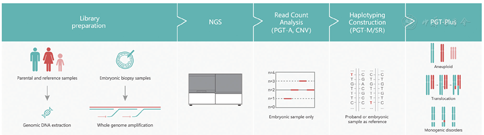
OnePGT combined with PGT-A, PGT-M, and PGT-SR was first reported in 2019[62]. OnePGT, based on reduced-representation genome sequencing (RRGS) and the haplarithmisis algorithm, is a method for automated haplotyping and copy number assessment of embryos. Compared to the reference method (STR-PCR), PGT-M results of OnePGT had 100% concordance in 160 samples from families with single-gene disorders. In comparison with the reference methods (array-CGH or FISH), PGT-SR and PGT-A had 100% concordance in 36 samples from couples with balanced translocations. However, 20 samples with inconclusive calls suggested the biological limitations of OnePGT, which requires additional family members for haplotyping. Zhang et al. reported a method based on family haplotype linkage analysis (FHLA) and cnvPartition as the core algorithm to accurately detect a broad spectrum of monogenic diseases, aneuploidy, and chromosome abnormalities in embryos[78]. For 59 embryos, aneuploidies were analyzed using SNP allele frequency and the log R ratio, monogenic disorder and chromosomal rearrangements were detected by haplotypes located within the 2 Mb region covering the targeted genes or breakpoint regions. Compared to the validation methods (karyotype analysis and Sanger sequencing), the PGT results showed 100% concordance in ten samples. However, pathogenic mutations cannot be directly detected using SNP array-based methods, and the sample number is insufficient to demonstrate comprehensive PGT advantages. Chen and colleagues developed a technique based on WGS with 10× depth of parental and 4× depth of embryonic sequencing data, which were utilized for haplotyping and copy number assessment to evaluate the concordance of PGT results for 53 embryos[86]. Compared with the reference methods (SNP for PGT-A, karyomapping for PGT-M, and PCR for PGT-SR), this method demonstrated 100% concordance in 53, 40, and 13 samples, respectively. Backenroth et al. developed Haploseek, which is based on SNP microarray, whole-genome sequencing, and hidden Markov model (HMM)[83]. This comprehensive method showed 100% concordance on PGT-M and PGT-A/SR results in 73 and 72 embryos, respectively, compared with PCR and VeriSeq-PGS[87]. Furthermore, Xie et al. developed a HaploPGT method (Fig. 2), also called PGT-Plus, combining RRGS, read-count analysis, and B allele frequency (BAF)-based haplarithmisis to detect different genetic disorders in a single test. By retrospectively analyzing 188 embryonic samples from 43 families, PGT-Plus revealed 100% concordance with the reference methods for all PGT-A, PGT-M, and PGT-SR results. In addition, triploidy, polyploidy, the absence of heterozygosity (AOH), balanced translocations, the origin of the CNVs, and PGT-HLA matching were verified in samples from patients[88]. Although comprehensive PGTs have numerous benefits, they still have limitations, such as additional family members other than embryos may be needed to deduce parental haplotypes to identify genetic disorder loci.
PGT using traditional TE biopsy techniques has been implemented worldwide and has been of benefit to thousands of families. However, micromanipulation techniques require specialized equipment and highly skilled embryologists. Additionally, embryo biopsy is invasive and people may concern its potential to affect embryo development and offspring health. Accordingly, a non-invasive sampling approach has emerged as a convenient and desirable alternative.
Palini et al. made the first attempt to assess the potential for determining the sex of embryos by PGT using blastocyst fluid (BF)[89]. The multi-copy Y chromosome gene (TSPY1) and autosomal control gene (TBC1D3) on chromosome 17 were amplified by quantitative PCR (qPCR) to determine the sex of the embryos, enabling the transplantation of only female embryos to avoid downward transmission of X-linked genetic diseases[89]. Subsequently, Stigliani et al. firstly demonstrated the presence of both genomic and mitochondrial DNA in embryo cultures using aCGH[90]. Tests performed using 57 embryos from 7 couples confirmed the presence of cell-free DNA (cfDNA) fragments in the spent blastocyst culture medium (SCM) samples and the potential amplification of such fragments for subsequent genetic analysis[91].
The discovery of DNA suitable for amplification and genetic testing in BF and SCM, coupled with the development of WGA and NGS, opens a new chapter in niEVT/niPGT technology (Fig. 3). Undoubtedly, eliminating embryo biopsy procedures would convey economic and practical advantages for the genetic evaluation of embryos. Further, niEVT causes little, if any, risk of damage to the embryo. Some success has been achieved in detecting genetic mutations in BF and SCM. Galluzzi et al. evaluated the potential of detecting point mutations using embryo extracellular matrices as the source of DNA. Amplified DNA was found in 93.7% and 94.4% of SCM on D3 and D5/6, respectively. The detection rates of the MTHFR gene polymorphism site, C677T, were 62.5% and 44.4% in SCM and BF, respectively[91]. Capalbo et al. carried out an embryo haplotype analysis on the amplification of BF cfDNA and TE cells of the same embryo from 69 samples. However, the results only showed 2.9% concordance[92]. Ou et al. conducted a comparative study involving 26 SCM samples containing BF (Group A) and 33 samples without BF (Group B). Based on the results, interestingly, the concordance rate of HBB mutation and haplotyping in group A was higher than that in group B, which laid a good foundation of the inclusion of BF in the non-invasive method[93]. Different amplification efficiencies have been reported between studies in many cases. In BF samples, the amplification success rate ranged from 34.8% to 87.5%[89,92,94,95,96,97,98]. Additional PCR of 10 disease-associated genes yielded successful amplification in 84% of BF samples (n = 5). Magli et al. found that the success rate of BF amplification was related to chromosome ploidy, and the success rate of BF amplification in euploid chromosomes (n = 32, 45%) was significantly lower than that in aneuploid chromosomes (n = 150, 81%). According to researchers, this result could be due to the ability of the embryo’s self-saving mechanism to eliminate aneuploid chromosome cells and expel DNA into the blastocyst cavity[99]. Another impacting factor might stem from the heterogeneity in technical expertise in blastocentesis[96]. Thus, despite its potential clinical value[100], this application is not widely applied.
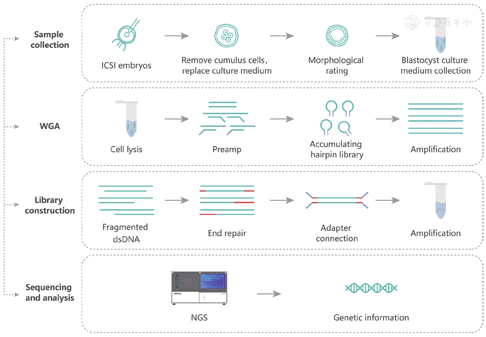
Shamonki et al. made the first attempt to determine the potential of PGS by testing cfDNA in SCM. The amplification rate reached 96.5%, and detectable DNA ranged from 2 to 642 ng/μL after amplification, which preliminarily proved the feasibility of performing niEVT using SCM[100]. Rubio et al. and Chen et al. used ICM as the standard to compare the diagnostic efficiency between SCM and TE biopsy, suggesting that niEVT using SCM had a diagnostic efficiency similar to that of TE biopsy PGT-A. The results of Chen et al. also revealed more reliability for predicting karyotypes of ICM than initial TE biopsy regarding mosaic embryos[101,102]. Subsequently, researchers optimized the sampling time and amplification method of the SCM. Lane and colleagues compared the accuracy of niEVT detection using D3-D5 SCM and D4-D5 SCM and found that the chromosome consistency between D4-D5 SCM and TE was greater than 95% and the sex consistency reached 100%, which was significantly higher than that of D3-D5 SCM (65.4%)[103]. Ho et al. collected 41 D1-D3 or D1-D5 2PN SCM samples, and found that the amplification rate of D5-SCM was substantially higher than that of D3-SCM (80.4% vs. 39%). As the embryo develops, the total number of cells in the embryo increases, and the quantity of cfDNA in the SCM increases as well[104]. In 2019, 115 D4/5/6 SCM samples were tested for niEVT, and the detection success rate increased with culture time. Furthermore, the consistency was apparently improved compared to that of TE biopsy[105]. As contradictory aneuploidy results were detected in TE and SCM samples and reported by two studies, the aneuploidies observed in the two sample types were found to be opposites in terms of loss or gain of chromosomes. A reasonable explanation for the mechanism of this phenomenon is still being drafted[103,106]. Huang et al. optimized the amplification method and adjusted the threshold of mosaic blastocysts to reduce the false positive rate (FRR) caused by NGS noise, enabling the detection rate of niEVT to reach 92.3%. The consistency between SCM-DNA and whole embryos reached 83.3%, significantly higher than that of TE biopsy[107]. In 2016, Xu et al. reported the first clinical application of non-invasive chromosome screening, which resulted in the live birth of a chromosomally normal and healthy baby[108]. A multicenter randomized controlled study reported that niEVT had an average consistency of 78.2%, sensitivity of 81.7%, and specificity of 77.4% compared with PGT-A in eight reproductive centers. No noticeable difference was found among the centers, suggesting that niEVT can be used as an effective method for embryo selection in clinics[101]. As researchers have optimized experimental and analytical techniques, niEVT is less invasive to the embryo than traditional TE biopsy and can detect mosaic blastocysts. The cfDNA of SCM is derived from TE and ICM cells, which is theoretically more comprehensive than the DNA obtained from TE biopsy and could better reflect the actual chromosomal situation of the whole embryo[109]. Compared with traditional PGT technology, niEVT is safer, more straightforward, and does not involve embryo handling or specialized equipment.
Although a few groups have reached ploidy concordances between BF samples and TE biopsy higher than 97%, the non-invasive method remains inferior to gold standard TE biopsy[110]. In addition, the amount of cfDNA in BF is relatively small, leading to false positive or false negative occurrences due to the uneven distribution of WGA and ADO[111]. Differences in the collection and storage methods of BF, DNA amplification approaches, and the quality of the embryos will significantly impact the results obtained using the non-invasive approach with BF. The outcome of niEVT varied with the inclusion criteria, the number of embryos selected, and the proportion of mosaicism in embryos. SCM could also affect detection efficiency due to mosaic conditions in the embryo, preferential elimination of aneuploid cells, and DNA contamination. Therefore, niEVT technology requires a standard procedure for further laboratory and clinical studies. In summary, although several clinical implications and limitations of niEVT have been highlighted, the clinical application of this innovative technique is promising.
The above PGT technologies focus on Mendelian genetic disorders that reflect the inheritance of a single causative gene. However, polygenic diseases account for a large percentage of premature human deaths and have occurred markedly more frequently than monogenic disorders in the past 25 years[112]. According to WHO’s World Health Statistics reports in 2021[113], except COVID-19, seven of the 10 leading causes of death globally were chronic non-communicable diseases (NCDs), including cancers, cardiovascular diseases, diabetes, chronic respiratory diseases, and others, accounting for 73.6% of all deaths in 2019. NCDs are primarily polygenic disorders caused by the additive and interactive effects of multiple genes[114]. PGT-P is a genetic test explicitly designed for polygenic disease risk evaluation. Schulman and Edwards first proposed the concept in 1996 based on their assertion that "many of the major human traits are highly polygenic, and a large number of genes may possibly be analyzed in embryos in the near future" [115]. As the name suggests, PGT-P involves a biopsy of each embryo and ranks the embryos for polygenic risk based on genomic data, selecting embryos with the lowest polygenic disorder risk for implantation (Fig. 4). However, this idea did not become a reality until Treff et al. screened embryos clinically for type 1 diabetes in 2019[116]. This group later extended their research to tens of thousands of sibling pairs to evaluate the clinical utility of PGT-P for embryo selection[117].
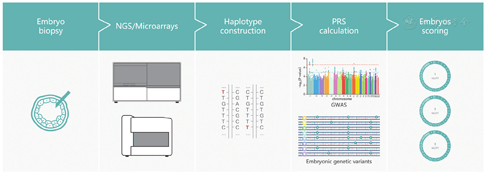
The practice and application of PGT-P are warranted owing to the higher prevalence and impact of polygenic disorders relative to monogenic disorders. The complexity of polygenic conditions has led to the development of PGT-P. The polygenic risk score (PRS) or polygenic score (PGS), calculated as the sum of the corresponding weighted genotype effect size based on genetic variations derived from genome-wide association study summary statistics, is the only approach that provides an estimate of genetic liability to a polygenic disorder at the individual level[118]. The genotypes are generally common SNPs, and their effect size may be shrunk or scaled, as the practice of the unadjusted effect of SNPs will generate poor polygenic risk with high standard error. This is because not all SNPs influence the targeted phenotypes, and the reported effects are estimated under variable conditions[119,120,121]. Several complex diseases, including diabetes, cancers, cardiovascular diseases, and female reproductive system diseases, have been predicted accurately by PRS, despite potential environmental influence in the past few years[122,123,124,125,126]. Currently, the same performance of polygenic disorder prediction in adults can be achieved in pre-implantation embryos[127].
Several methods have been developed to calculate PRS following strict data quality control, including aspects of selected summary statistical data, detected genotype data, and joint consideration[128]. The QC process is crucial, as the validity and power of PRS depend on data quality, and these aspects are essential in practice. Algorithms used in model training can be classified into two categories: SNPs pruning and effect shrinking[129]. The pruning algorithm identifies a reduced set of genetic variants via pruning on linkage disequilibrium and clumping, where index SNPs of each cluster in the genome were selected. This algorithm can be implemented in the PLINK[130] and PRSice-2[131] software, where QC is executed manually or automatically. The shrinking algorithm assesses the best genetic prediction by statistical shrinkage or regularization techniques, such as LASSO or ridge regression[119], or explicitly modeling the correlation structure between variants via prior distribution specifications, such as the Bayesian approaches LDPred[132]. The capability to accurately predict the risk of polygenic disorders is largely a consequence of advances in contemporary machine learning algorithms[133] and the development of extensive DNA biobank databases, such as the UK BioBank[134].
As previously noted, PRS reflects the genetic susceptibility of an individual to a trait that is generally a mutual consequence of genetic regulation and environmental factors, and high polygenic disease risk may be offset by a healthy lifestyle or therapy and prevention corresponding to a specific disease to reduce the risk of environmental exposure[135]. However, the extent to which a high PRS can be offset remains unclear[136]. Parents should be informed appropriately of embryo polygenic risk after PGT-P, despite the argument that selection against high-risk embryos is itself a designer baby outcome. The American Society for Reproductive Medicine Practice Committee proposed that PGT for onset conditions of lesser severity or lower penetrance is ethical for reasons of reproductive liberty[42].
Polygenic risk identification for individuals is similar to conferring relative risk of monogenic diseases, but with a markedly higher carrier frequency (ie, a potentially weaker genetic effect per variant). Regrettably, access to clinical risk indicators, whose combination with PRS would more precisely identify individuals with elevated polygenic disease risks, is frequently unavailable[135]. Therefore, extended family history, including not only the presence or absence of diseases among relatives, but also the age of disease onset and clinical manifestations of affected families, may be required and all factors must be combined to generate a more reliable result[137]. Although PGT-P has been introduced commercially, its complexities have led to a lack of specific guidance. A recent survey revealed that many aspects of the normative documents of PGT-M could be adopted for PGT-P[138]. PGT-P can evaluate clinical conditions and many other polygenic traits, which raises considerable ethical concerns; thus, treating PGT-P as a supplement to conventional PGT-M might be an acceptable option.
Several meta-analyses demonstrated that PGT-A can significantly improve pregnancy outcomes of women when compared to those who underwent non-PGT IVF treatment. In 2018, Natsuaki and Dimler conducted a PGT-A meta-analysis on 26 studies for clinical pregnancy and live births and 18 studies for childhood outcomes[139]. Results demonstrated that in the group that conducted PGT-A, women had significantly higher clinical pregnancy rates (RR 1.207, 95% confidence interval [CI] 1.017-1.431) and LBR (RR 1.362, 95% CI 1.057-1.755) than the IVF group that had not undergone CCS, indicating a positive effect of PGT-A. Furthermore, early childhood outcomes of PGT-A children did not differ from those of non-PGT-A kids. Nevertheless, Simopoulou et al. reported no LBR improvement was observed in the general population (RR 1.11, 95% CI 0.87-1.42, n=1513) in their meta-analysis that included 11 randomized controlled trials (RCTs), but achieved lower miscarriage rate (RR 0.45, 95% CI 0.25-0.80, n = 912), and cumulative LBR per patient was also improved (RR 1.36, 95% CI 1.13-1.64, n = 580). Notably, PGT-A significantly improved LBR in women over 35 (RR 1.29, 95% CI 1.05-1.60, n = 692)[40]. Shi et al. achieved similar results in 2021, which demonstrated a significantly higher LBR in the PGT-A group than IVF/ICSI group in three trials (RR 1.30, 95% CI 1.03-1.65, n = 270) involving women of AMA (over 35 years old)[140]. Interestingly, only the subgroup of blastocyst biopsy demonstrated higher LBR among different stages of embryo biopsy. PGD also showed positive effects compared to intra-cytoplasmic sperm injection (ICSI) and translocation carriers’ group. A meta-analysis focused on PGT-SR that included six cohort studies found an increased successful pregnancy outcome of translocation carriers (OR = 8.58, 95% CI 1.40-52.76)[141] .
Several research groups conducted systematic reviews and meta-analyses of obstetric and neonatal outcomes of general PGT. Hou et al. enrolled 54,294 participants in the PGT group and 731,151 individuals in the IVF/ICSI group in their meta-analysis. They concluded that PGT did not increase the risk of adverse obstetric outcomes[142]. To be specific, lower rates of LBW (RR 0.85, 95% CI 0.75-0.98), VLBW (very low birth weight, RR 0.52, 95% CI 0.33-0.81), and VPB (very preterm births, RR 0.55, 95% CI 0.42-0.70) in PGT pregnancies than those of IVF/ICSI, though PGT group had a higher rate of hypertensive disorders of pregnancy (HDP, RR 1.30, 95% CI 1.08-1.57). Zheng and colleagues obtained similar results in their meta-analysis that included 15 studies involving 3682 PGT babies, 127,719 IVF/ICSI newborns, and 915,222 babies born from spontaneously conceived (SC) pregnancies[143]. Compared with IVF/ICSI group, the risks of VPB and VLBW were significantly decreased by 41% and 30% in PGT pregnancies, respectively, though again, a higher risk of HDP increased by 50% was observed. Nevertheless, when compared with SC pregnancies, which enrolled significantly more participants, the PGT group showed higher rates of LBW (RR 3.95, 95% CI 2.32-6.72), preterm births (RR 3.12, 95% CI 2.67-3.64), and HDP (RR 3.12, 95% CI 2.18-4.47). Overall, PGT pregnancies demonstrated favorable outcomes for the majority of indications compared with the IVF/ICSI group but not as good as SC pregnancies. This might be because of the relatively smaller number and advanced ages of PGT participants.
Primary advanced techniques have been introduced in PGT clinics and laboratory practices over the years, leading to the use of PGT as a well-established, accurate, and safe procedure for addressing reproductive issues. The widespread implementation of genomewide methods has enabled greater standardization and uniformity in PGT practices. As the cost of sequencing continues to decline, all-in-one PGT solutions, such as PGT-Plus, are promising for clinic implementation. In addition to NGS-based comprehensive PGTs, PGH provides an array-based one-stop method to obtain combined PGT results. LRS has also been applied to detect the breakpoint of rearrangements in PGT conduction. However, the relatively higher cost and error rate of LRS compared to NGS limits its application at present. Other emerging PGT applications, such as PGT-P and niEVT/niPGT, though with ethical discussions and cannot completely replace conventional PGTs currently, they do increase awareness among patients regarding the risks of transmitting genetic disorders to offspring and can potentially help to improve reproductive health. Together with the advances in people’s living standards and declining testing costs, the global penetration of PGT services, especially in China, will continue to rise, and more people will benefit from PGT.
None.
All authors declare no conflict of interest.
Du RQ, Zhao DD, Kang K, Wang F, Xu RX, Chi CL, Kong LY, Liang B. A review of pre-implantation genetic testing technologies and applications. Reprod Dev Med 2023;7(1):20-31. doi: 10.1097/RD9.0000000000000049


